Engineering
We've integrated robotics into legacy systems, shipped production systems across an array of verticals, developed expertise in modern and established technologies, and our customers keep coming back with new, harder problems.
We love that.
INDUSTRIES
Each vertical below represents a domain where we've built production systems, not explored peripherally. The problems listed are ones we've actually encountered and solved.
Autonomous systems in unstructured environments, complex navigation, Human/Robot Interaction, and mission-critical projects that need to scale beyond human capacity.
Autonomous mobile robots, fleet orchestration, operator tooling, and the integration layer between robotics systems and existing WMS infrastructure.
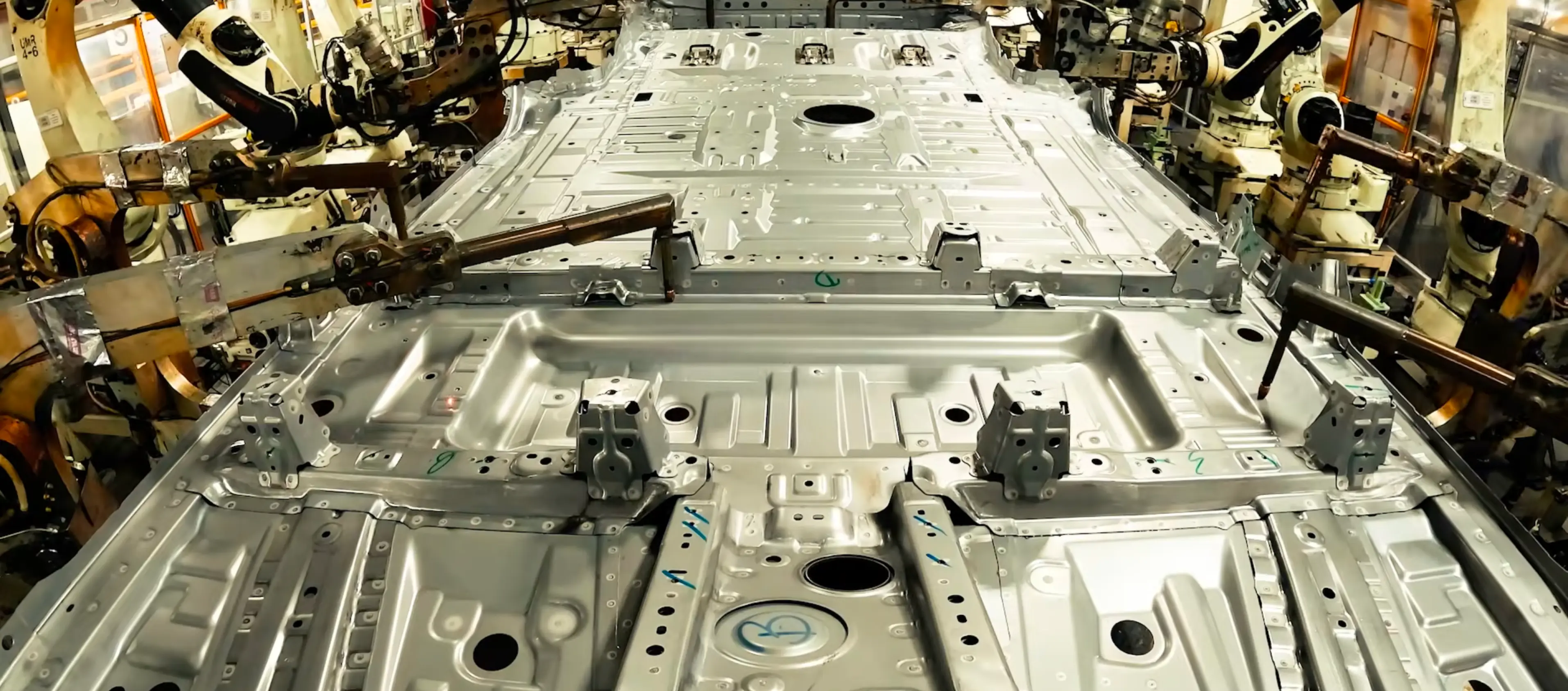
Industrial inspection, quality control automation, human-robot collaboration, and manufacturing intelligence systems.
Internal platforms, data infrastructure, and developer tooling for engineering-intensive organizations that hold their software to the same standard they hold their own engineers.
Advanced driver assistance, teleoperation, R&D tooling, and the software infrastructure that bridges research and production vehicle programs.
A recurring engagement pattern across every vertical: organizations with working research systems that need a partner to make them production-ready.
SERVICES
Our approach to every project follows a proven methodology, ensuring scope, scale, strategy, and speed are all made clear.
Deep discovery to understand the real problem, not just the stated one. We map constraints, risks, and success criteria before anything else.
Systems architecture and detailed design that account for real-world constraints, not just what works in a demo environment.
Fast-moving early phases include prototypes and tests to build alignment between technical and product teams. Durable assets take shape.
Production-grade delivery with rigorous testing, documentation, and the operational support to go live smoothly and successfully.
Post-deployment data collection and iteration to improve performance over time and close the loop between field and engineering.
Infrastructure, tooling, and knowledge transfer to help your team own and grow the system after the project concludes.
TECHNOLOGY
These are the systems and technologies in which we have genuine depth, and have built in production repeatedly across robotics, connected devices, and real-world operational environments.
AI runs through everything we build, accelerating development, surfacing patterns in data, generating custom synthetic data, and extending what's technically possible. We won't use a chisel when a power tool does the job better. The judgment about how and when to apply AI is ours. That's the expertise.
1
Distributed systems, data pipelines, edge-cloud architecture, telemetry systems, system resiliency, mission critical systems
Our thoughts on this
We’ve built systems to control power feeds in gigawatts of datacenters, robot-driven factories, and many other complex real-world environments. We plan for how systems actually behave in production, not how they’re supposed to.
We know and can use
Cloud providers (AWS, GCP, Azure, and more), Kubernetes, Docker, Terraform, PostgreSQL, TimescaleDB, Kafka, OpenTelemetry, Prometheus, Grafana.
2
Low-latency communication, distributed messaging, telemetry streaming, system synchronization
Our thoughts on this:
We build systems that stay connected when the real world doesn’t cooperate. We’ve run fleets of robots over flaky cellular links, built for and in factories with no reliable WiFi, and integrated with networks that are closed or segmented by design. We design for the real world, keeping devices, operators, and systems in sync across edge and cloud.
In practice, this often means:
WebRTC, Zenoh, MQTT, gRPC, WebSockets, ROS Bridge, Tailscale, ZeroTier, cellular failover, edge gateways
3
Operational tooling, dashboards, real-time visualization, control systems, 3D interfaces
Our thoughts on this:
We’re designers and frontend engineers who know what a quaternion is. We build interfaces for systems that move and operate in real time, where correctness matters as much as usability. We can debug coordinate frames, reason about 3D transforms, and make complex system state legible and actionable.
In practice, this often means:
HMI/Scada, BabylonJS, ThreeJS, DeckGL
4
Traditional Testing & QA Systems: CI/CD pipelines, regression testing, scenario testing, test orchestration
Physical World Modeling & Simulation: Contact rich simulation, scenario generation, environment modeling
Our thoughts on this:
We combine automated testing, simulation, and real-world data capture to validate how systems actually behave before they break. We apply this approach, used in autonomous systems, to all software we develop.
In practice, this often means:
Playwright, Cypress, GitHub Actions, GitLab CI, Github ARQ, hardware-in-the-loop (HIL), software-in-the-loop (SIL), Gazebo, Isaac Sim, MuJoCo, PhysX, scenario replay
5
Real-world data capture, structured telemetry, event-driven systems, behavior replay, time-indexed system state
Our thoughts on this:
When a robot drops offline, a datacenter goes dark, or a prototype device shows up in production, you don’t guess. You replay it, trace it, and fix it. We build the systems that make that possible. Telemetry is captured across devices and services, structured into streams, and retained in a way that makes system behavior inspectable over time.
In practice, this often means:
Foxglove, MCAP, ROS/ROS2, Protobuf, gRPC, WebSockets, OpenTelemetry, time-series databases, custom replay tooling
6
Reproducible training, model versioning, data lineage, deployment pipelines, real-time inference, monitoring and drift detection, feedback loops
Our thoughts on this:
We treat models as part of a larger system, not isolated artifacts. We've built MLOps pipelines that organize data from thousands of cameras across PII-constrained office environments and from dozens of factories running thousands of robots, feeding it all through clean, compliant, version-controlled workflows with measured improvements at every stage. That means reproducible training, tracked deployments, and the monitoring and feedback loops needed to keep models reliable in production, especially where data changes, environments shift, and failure has real consequences.
In practice, this often means:
MLflow, Weights & Biases, PyTorch, TensorFlow, ONNX, TensorRT, Docker, Kubernetes, Airflow, feature stores, model monitoring systems.
Insights


Bring us your hardest problems.
You’ll find us fearless, and honest.