Engineering
Capability study
·
Client confidential
A factory's physical devices were generating valuable operational data, but none of it was being captured in a way anyone could act on. Text message alerts went unread. Downtime dragged on because no one knew a robot had stopped. We built a BI and escalation system for physical devices that gives factory teams the same visibility into their equipment that software teams expect from their infrastructure.
Alerting and escalation
Fleet management
Industrial analytics
Operational dashboards
New test cat
At a glance
No data capture, no visibility, no reliable way to alert humans when machines need attention
Architecture, full-stack engineering, data pipeline design
Time-series data capture, real-time dashboards, multi-channel alerting
Part of a ~6-month fleet management platform build
Enterprise manufacturers with mixed robot and device fleets
Industrial manufacturing, fleet operations
Mean time to resolution after alert deployment
Reduction in unplanned downtime
Alert acknowledgment rate
What we left behind
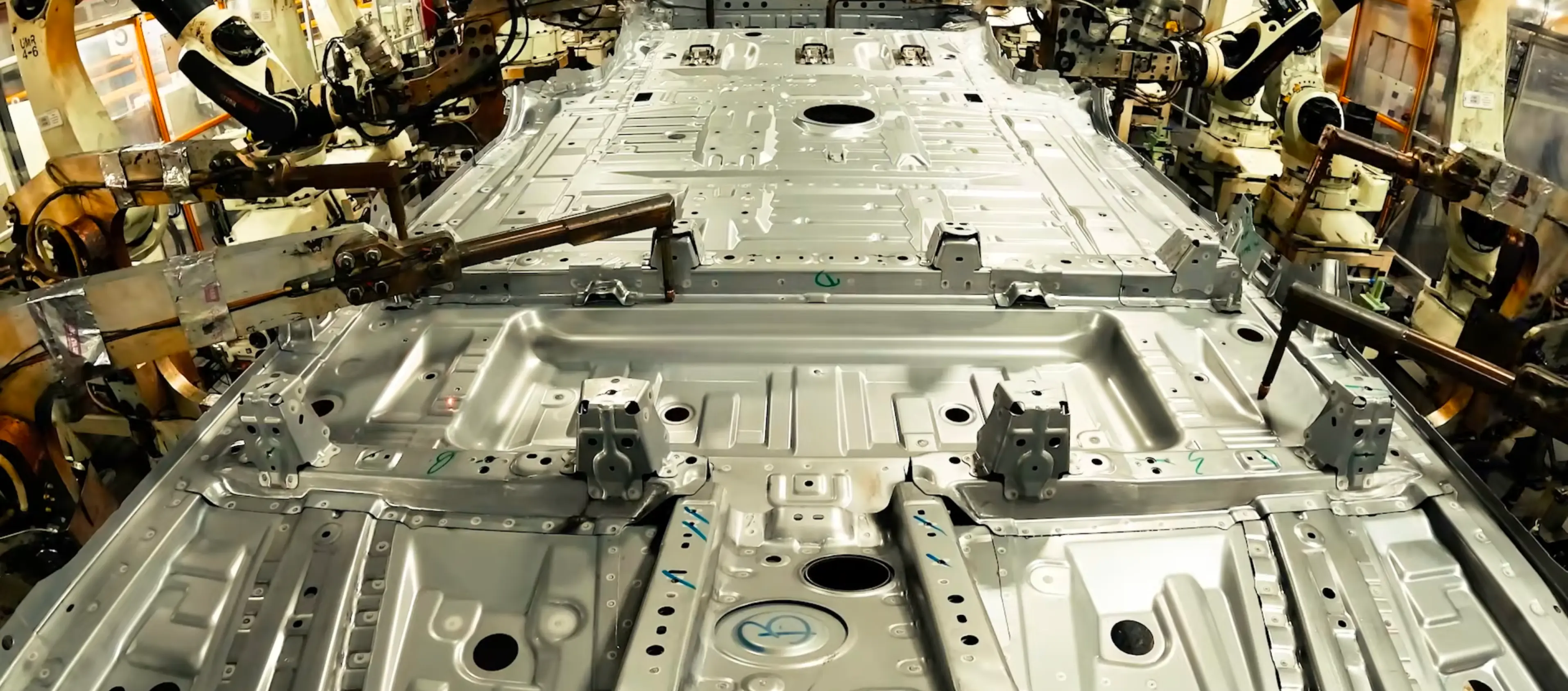
The factory floor had robots, conveyors, sensors, and autonomous mobile robots (AMRs) generating constant streams of operational data. But the systems were disparate. Some were completely offline. Data was not being captured, aggregated, or analyzed in any structured way. When a robot stopped working, the only notification system was a text message to a single engineer's phone.
In a factory environment, text messages fail. The floor is loud. Workers wear gloves. Phones are often out of reach, locked in a break room, or on silent. A robot could be down for thirty minutes before anyone noticed, and there was no way to know whether the issue had been seen, acknowledged, or resolved. There was also no historical data to identify patterns: which machines failed most often, what time of day, after which operations. Every incident was treated as a surprise, because the infrastructure to learn from them did not exist.
The problem was especially acute for AMRs. Unlike stationary robot arms that fail in predictable ways, mobile robots navigate dynamic environments and encounter a wider range of failure modes: navigation timeouts, obstacle detection false positives, battery degradation, communication drops. Their non-stationary nature makes them inherently less reliable and harder To monitor at scale.
Frontiers engineering in action
The first step was building the data pipeline. We instrumented the fleet management platform to capture operational telemetry from every connected device: uptime, error codes, performance metrics, environmental readings. This data feeds into a time-series store that supports both real- time dashboards and historical analysis.
The dashboards provide fleet-wide visibility that simply did not exist before. Factory managers can see at a glance which cells are running, which are degraded, and which are down. Drill-down views show individual device health, recent event logs, and trend data. This is the kind of operational intelligence that software teams take for granted through tools like Datadog or Grafana, but that factory operations teams almost never have for their physical equipment.
The more valuable innovation is the escalation system. Inspired by PagerDuty's approach to incident management in software operations, we built a multi-channel alerting system designedfor factory environments. When a device enters an error state, the system does not just send a text message and hope. It follows a defined escalation chain.
The first alert goes out via radio, not text, because factory workers are more likely to have a radio on their person than to be checking their phones. If the alert is not acknowledged within aconfigurable window, it escalates to the next person in the chain. If that person does not respond, it escalates again. The system guarantees that a human being sees and acknowledges every critical alert, and it logs every step so the factory can track responsiveness over time.

With structured data capture and reliable incident tracking in place, the system enables a layer of operational analytics that was previously impossible. Factory teams can measure mean time to resolution (MTTR) across devices, shifts, and facilities. They can identify which machines fail most frequently and correlate failures with specific operational conditions. Over time, this datatransforms maintenance from reactive to predictive.
The key insight from a software architecture perspective is that the core analytics and alerting engine is equipment-agnostic. Although this system was built for robotics, the same data capture, dashboarding, and escalation patterns apply to any fleet of physical devices. The capability extends naturally to non-robotic factory equipment, and the architecture was designed with that breadth in mind.
Frontiers engineering in action
Software engineering teams have spent decades building increasingly sophisticated observability infrastructure: logging, metrics, dashboards, on-call rotations, incident management. Companies like Datadog, PagerDuty, and Grafana exist because software teams refuse to operate blind. But factory operations teams managing millions of dollars in physical equipment often have nothing comparable. They rely on text messages, walkie-talkies, and tribal knowledge.
We built a BI and alerting system for physical devices using the same architectural rigor that the best software operations teams expect, adapted for the specific constraints of factory environments: noisy floors where phones are impractical, shift- based staffing where escalation chains need to rotate, and equipment diversity where a single monitoring framework needs to accommodate robots, conveyors, sensors, and AMRs.
The result was a structural change in how these factory teams related to their equipment. Incidents stopped being surprises and started being data. Patterns emerged. Maintenance shifted from reactive to informed. And the metrics that matter most, like MTTR, became measurable for the first time.
What we shipped
Like every engagement, this one ended with the client in full control. No black boxes, no proprietary layers, no forced dependency on us.

Fleet-wide and device-level views showing uptime, health, error history, and trend data across all connected equipment.
.svg)
Radio-first alerting with configurable escalation chains, acknowledgment tracking, and guaranteed human attention for critical events.
.svg)
Structured data capture enabling MTTR measurement, failure pattern identification, and shift level performance reporting.
.svg)
Designed to accommodate any fleet of physical devices, not just robots. Extensible to non-robotic equipment without architectural changes.
Capabilities used
Escalation policy architecture
Factory process observation
Incident workflow design
Requirements definition
Multi-Protocol Adaptors
Edge Computing
On-Robot Agents
Low Latency Networking
Secure Tunneling
Babylon.js
React
Analytics and reporting
Radio integration
Escalation engine
Multi-channel alerting
Real-time dashboards
Time-series data pipelines
Event-driven Architecture
Fail-Safe Architecture
Graceful Degradation
CI/CD
Clean handoff
Shift-aware scheduling
Equipment-agnostic abstraction
Observability-first design
Insights